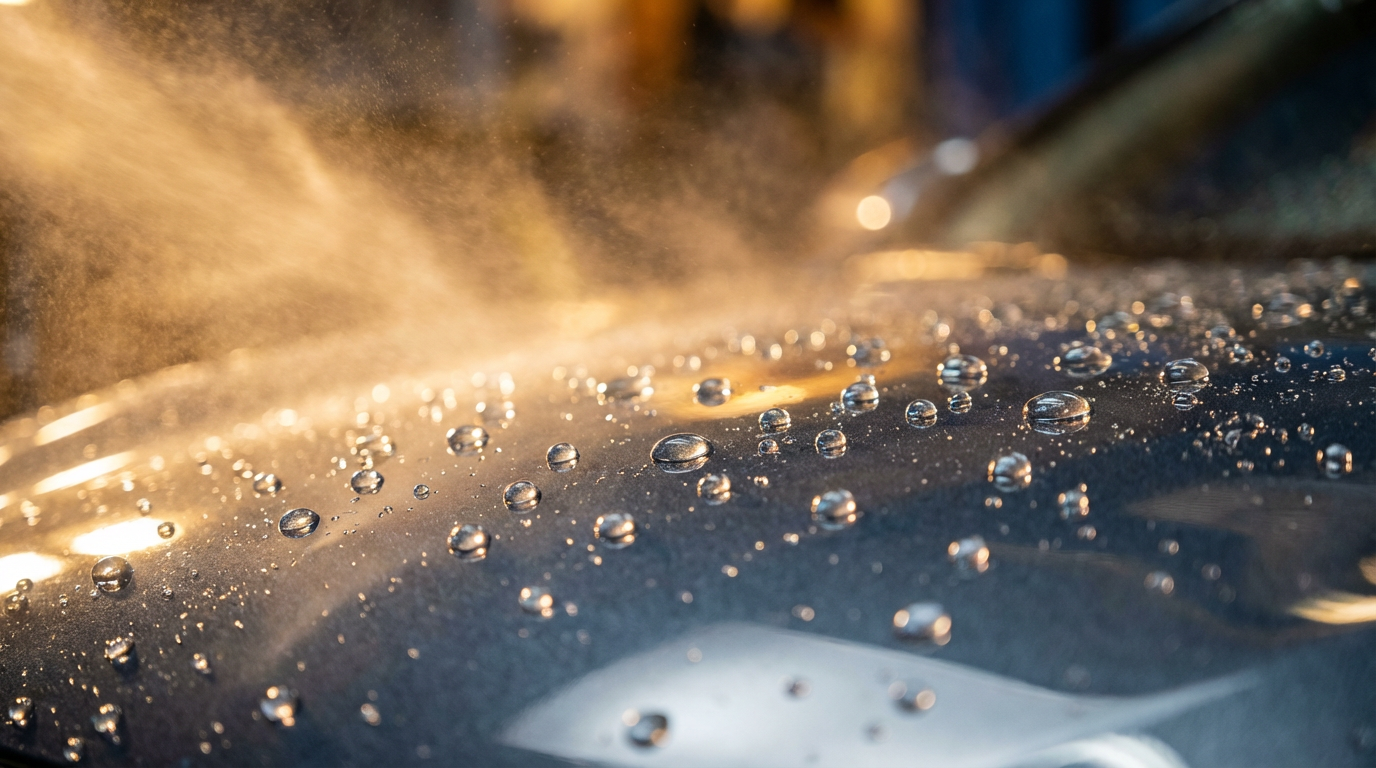
You can fix a canopy that has lost its protective coating by cleaning the fabric and applying a fresh Durable Water Repellent spray. If you notice your umbrella waterproofing worn off how to restore it involves rinsing away dirt, drying the material, and then spraying an even coat of a hydrophobic treatment across the surface. This simple process restores the water-beading effect and ensures you stay dry during heavy rain.
There is nothing more frustrating than stepping into a storm only to realize your once-reliable canopy is soaking through. When rain no longer beads and rolls off the surface, but instead saturates the fabric, your umbrella has lost its essential protective barrier. This failure, often referred to as wetting out, happens as the durable water repellent coating degrades over time through use and exposure. At BrellaShine, we believe a high quality umbrella should offer lasting performance; therefore, restoring this finish is vital for maintaining both elegance and function. In this guide, you will learn the science of DWR coatings and how to diagnose a failing finish. We provide a clear, step by step process for deep cleaning, heat reactivation, and the application of professional grade waterproofing sprays to return your canopy to its original, pristine condition.
The Science of Dry: Understanding Your Umbrella's DWR Coating
Most high-quality umbrellas, whether they are crafted from high-density Pongee, durable Polyester, or lightweight Nylon, rely on a factory-applied treatment called Durable Water Repellent (DWR). This is not a thick layer of plastic; rather, it is a sophisticated chemical finish that creates a microscopic landscape of tiny peaks on the fabric surface. These peaks increase the surface tension of the material, making it impossible for water to find a flat spot to settle. Instead of soaking into the fibers, raindrops form tight spheres and roll off the canopy instantly.
When this coating is healthy, your umbrella remains lightweight and dries with a single shake. However, as the umbrella waterproofing worn off how to restore becomes a concern, you will notice a process known as "wetting out." This occurs when the microscopic spikes are flattened by friction or buried under debris, allowing water to saturate the fibers directly. A wetted-out canopy becomes heavy, takes hours to dry, and eventually allows moisture to seep through the weave.
In a bustling urban environment like Newark, this degradation occurs significantly faster than in rural areas. Our local air carries a higher concentration of particulate matter, including exhaust soot, road salt, and industrial grime. These pollutants act as microscopic abrasives against the chemical bonds of the DWR every time you fold the fabric. Furthermore, urban grime is often acidic or oily, which chemically accelerates the breakdown of the repellent. Maintaining the integrity of these fibers through professional umbrella cleaning is essential for those who want to avoid the soggy weight of a failing canopy. Seeing a restoration showcase often highlights how much performance is lost when these invisible peaks collapse under Newark's unique environmental pressures. For those seeking umbrella repair services in Newark, understanding this chemistry is the first step toward a functional restoration.
4 Reasons Why Your Umbrella Waterproofing Is Failing
The degradation of your canopy's performance is rarely the result of a single event; rather, it is a cumulative failure driven by daily use. Mechanical wear remains the most persistent culprit. Every time you collapse your umbrella and tighten the closure strap, the fabric rubs against itself and the metal frame. This friction physically shears off the microscopic DWR peaks, leaving the fibers exposed.
Environmental factors in Newark play a significant role. Fine soot, industrial dust, and road salt settle into the weave and act as microscopic sponges. These contaminants trap moisture against the fabric, bypassing the repellent coating entirely. Furthermore, skin oils and hand cream residues transferred when you handle the canopy or wrap the tie strap act as chemical surfactants. These substances break down the surface tension that keeps water beading, creating localized spots where water immediately penetrates.
Finally, consistent UV exposure weakens the chemical bonds of the coating over time. When owners notice their umbrella leaking, they are often experiencing a wetted out fabric rather than a physical hole. If you find your shoulders getting damp, it is a sign that the umbrella waterproofing worn off how to restore the barrier should be your next priority. Regular professional umbrella cleaning can remove the oils and grit that accelerate this breakdown, while our restoration showcase demonstrates how even heavily used canopies can be revived through expert care.
The Wetting Out Test: How to Tell if the Coating Has Worn Off
Before investing in specialized products, perform a simple diagnostic test to assess the state of your canopy. Open the umbrella fully and use a spray bottle or a gentle stream from a kitchen faucet to apply water to various sections of the fabric. On a healthy DWR coating, water will immediately form distinct, spherical beads that roll off the surface with zero resistance. If the water begins to cling to the material or, more tellingly, if the fabric darkens as it absorbs moisture, the coating has failed. This absorption is the wetting out phase.
Observe the underside of the canopy during this test. If moisture travels through the weave to create a damp mist or visible droplets on the interior, the protective barrier is completely compromised. If the fabric beads water in most areas but only wets out near the closure strap or the tips, a professional umbrella cleaning may be sufficient to remove the oils causing localized failure. However, if the entire canopy darkens quickly, it is a clear indicator that your umbrella waterproofing worn off how to restore its integrity requires a full re-application. Reviewing our restoration showcase can help you identify these saturation patterns before seeking umbrella repair services in Newark.
Step 1: The Essential Deep Clean Before Re-Proofing
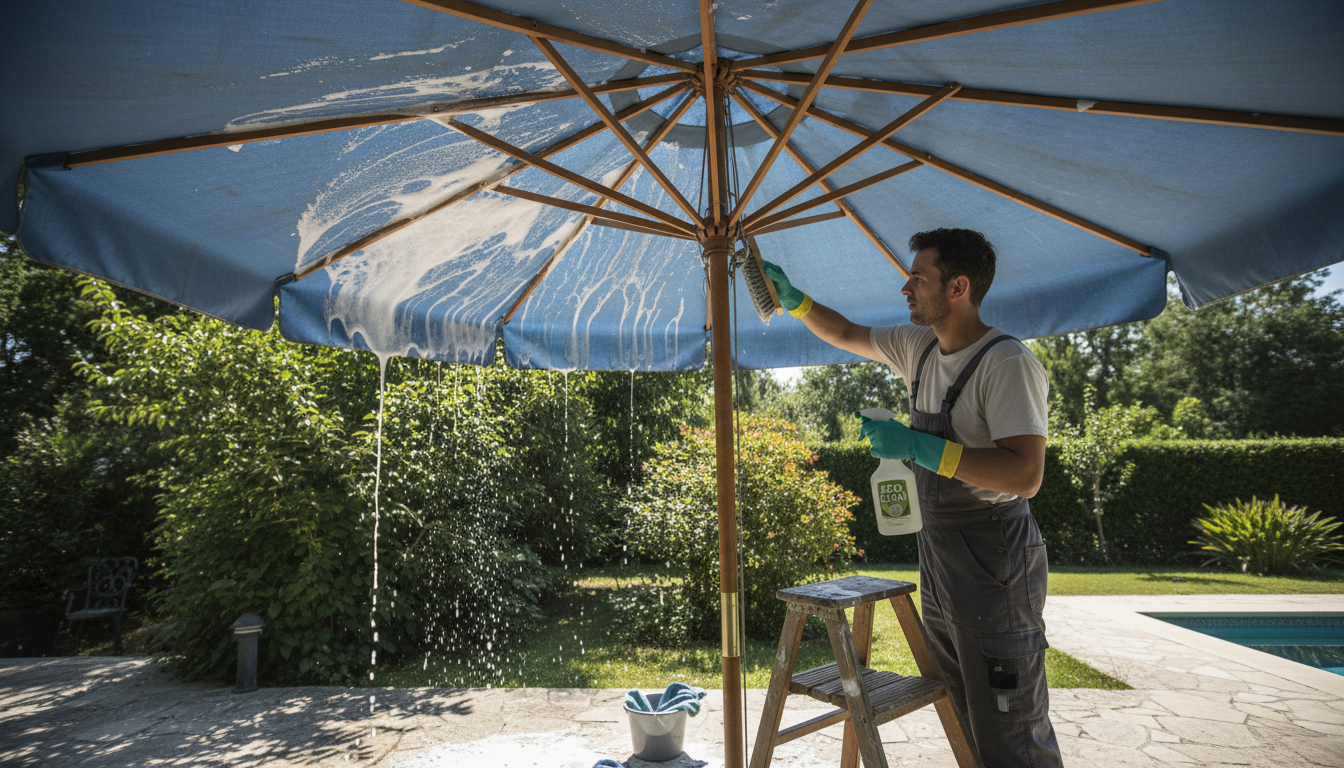
Once your diagnostic test confirms the need for intervention, the temptation is to reach immediately for a spray can. However, applying a fresh hydrophobic treatment over a layer of Newark's urban grime is a recipe for failure. Dirt, soot, and skin oils create a physical barrier that prevents new chemicals from bonding to the fabric fibers. If you spray over contaminants, you effectively laminate the grit into the weave, resulting in a coating that will flake off or fail prematurely.
Begin by opening the umbrella fully and rinsing it with lukewarm water to dislodge loose surface dust. Use a very mild soap, such as a specialized textile cleaner or a heavily diluted, fragrance-free liquid soap. Avoid harsh detergents, bleach, or fabric softeners, as these leave behind residues that counteract water repellency. Employ a soft-bristled brush to gently agitate the fabric, paying close attention to the fold lines and the area around the closure strap where hand oils are most concentrated.
Rinse the canopy thoroughly until every trace of soap is gone. The final, and most critical, part of this stage is the drying process. The umbrella must be 100% dry before you move to the next step. Any moisture trapped within the fibers will prevent the re-proofing agent from adhering properly. While professional umbrella cleaning uses climate-controlled drying, you should leave the canopy open in a well-ventilated, shaded area. Recognizing that umbrella waterproofing worn off how to restore starts with a pristine surface is the secret to a professional-grade finish.
Step 2: How to Reactivate Existing Waterproofing with Heat
Before purchasing a new chemical treatment, you can often revive dormant DWR molecules using what many call the hair dryer trick. This technique relies on the thermoplastic nature of the fluoropolymer chains found in quality canopies. Over time, these microscopic peaks collapse due to friction or improper storage, causing the wetting out effect. Applying gentle heat provides enough energy for these molecules to realign and stand upright; this process restores the fabric's surface tension without adding extra chemicals or weight.
Hold the hair dryer approximately six inches away from the clean, dry canopy, moving it constantly in a slow, sweeping motion. You must exercise extreme caution with temperature settings. High heat can easily reach the melting point of synthetic fibers like Polyester or Nylon, leading to permanent structural damage or visible warping. If your initial diagnostic test showed partial failure, knowing that umbrella waterproofing worn off how to restore can sometimes involve this simple molecular realignment is a professional grade insight. When heat fails to produce spheres, the coating is likely physically depleted. In these cases, professional umbrella cleaning or specialized umbrella repair services in Newark are the next logical steps. Examples of successfully revived canopies are available in our restoration showcase.
Step 3: A Guide to Applying New Waterproofing Sprays at Home
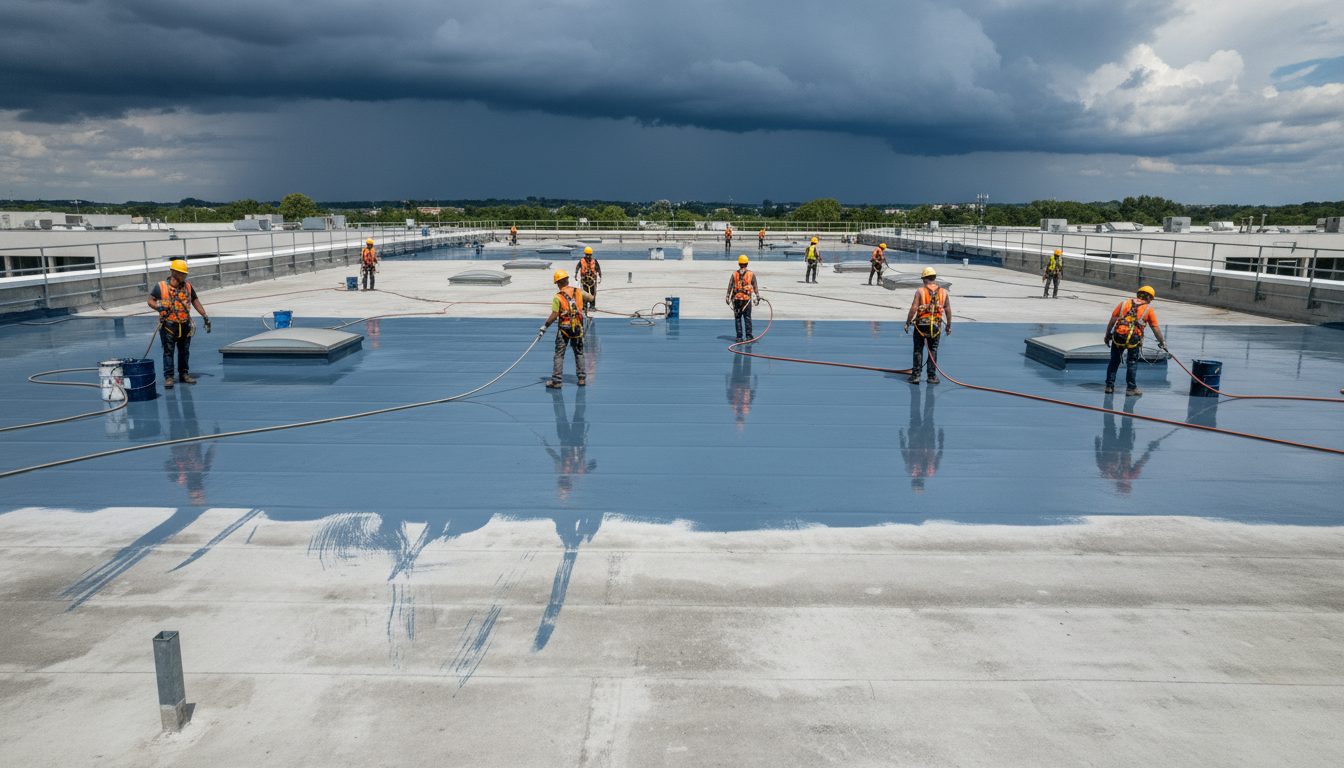
If heat reactivation fails to restore surface tension, applying a fresh chemical barrier is the next necessary step. This process requires a high quality aerosol repellent and a well ventilated workspace, ideally outdoors or in a garage with the door fully open. Aerosol fumes are potent, and a clear airflow prevents inhalation while ensuring the spray mist settles only on the fabric. Avoid using wash in treatments designed for outdoor apparel; while these work for jackets, submerging an umbrella in a basin or washing machine can cause irreversible corrosion to the metal frame or swelling in wooden handles.
Hold the spray canister approximately 10 to 12 inches from the canopy surface. Begin applying the treatment using slow, overlapping horizontal strokes to ensure even coverage across the entire radius. This technique prevents streaking and ensures no gaps are left in the microscopic barrier. Pay specific attention to the seams and the points where the fabric is stitched to the ribs. These needle holes are high stress areas where leaks typically originate once umbrella waterproofing worn off how to restore measures become necessary.
After application, the umbrella must remain fully open to cure. Leave it in a dust free environment for at least 24 hours to allow the chemical bonds to set. Rushing this curing phase or exposing the wet canopy to Newark's urban particulates will compromise the finish. For a visual standard of a successfully re-proofed canopy, our restoration showcase demonstrates the distinct beading patterns achieved through proper application. If the fabric remains porous after a DIY attempt, it may require the commercial grade treatments found in professional umbrella cleaning or specialized umbrella repair services in Newark.
Choosing the Best Product: Silicone vs Fluoropolymer Sprays
Selecting the right chemical treatment is the most important decision in the revival process. Most consumer options fall into two categories: silicone and fluoropolymers. Silicone based sprays provide an immediate, highly hydrophobic surface that causes water to bead aggressively. However, silicone has a notable disadvantage in Newark's urban climate; the coating can remain slightly tacky, acting as a magnet for airborne soot, road dust, and skin oils. Over time, this buildup creates a layer of grime that actually traps moisture against the fabric.
Fluoropolymer sprays, often utilizing C6 technology, are generally superior for umbrellas because they are oleophobic as well as hydrophobic. This means they repel both water and oils, keeping the canopy cleaner in high traffic environments. For eco conscious Newark residents, C0 or PFC free coatings are the modern standard. These formulations provide excellent water protection without the environmental persistence of older fluorocarbons. When umbrella waterproofing worn off how to restore the finish effectively requires matching the product to your specific fabric type. Reviewing a restoration showcase can help you identify the results of these different chemistries. If you prefer a treatment that balances performance with environmental safety, professional umbrella cleaning utilizes industrial grade versions of these coatings that bond more deeply than hardware store aerosols.
When DIY Is Not Enough: The Case for Professional Restoration
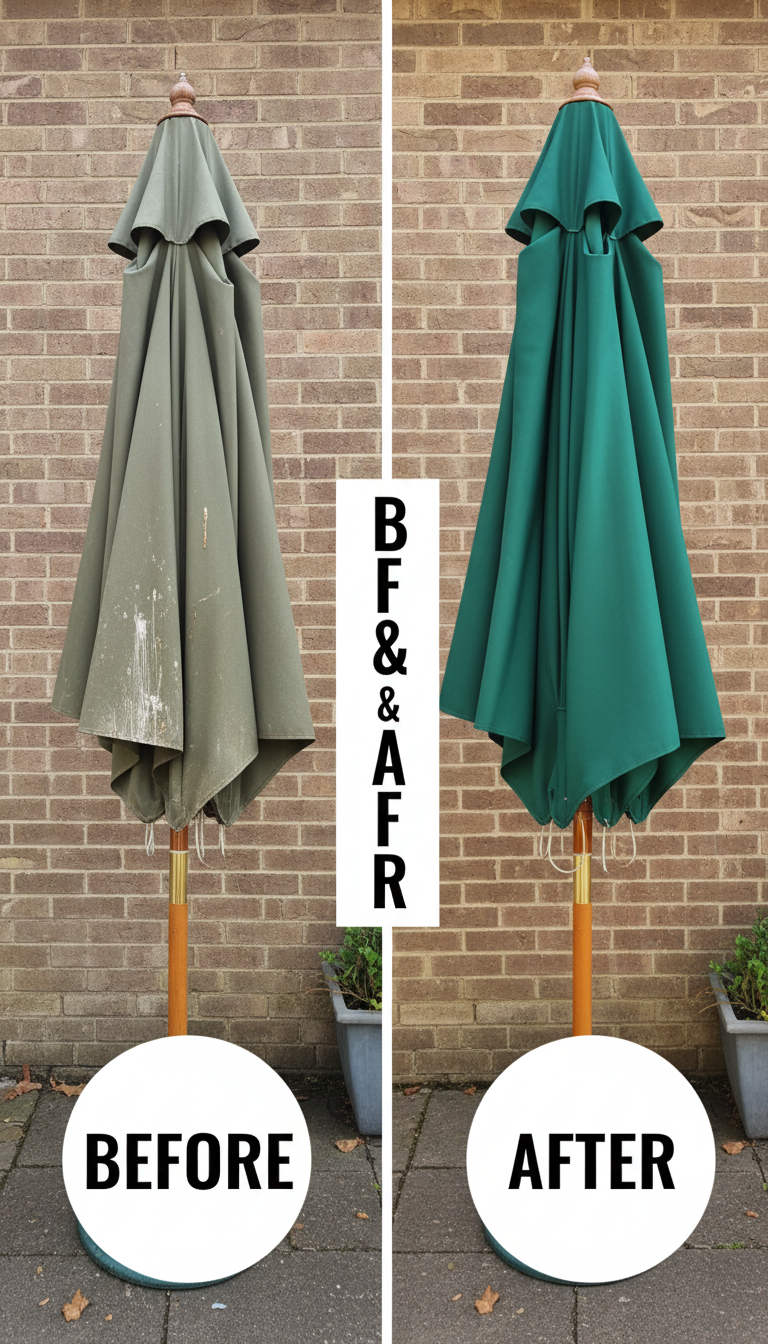
Consumer sprays often fail when the underlying material has suffered significant structural degradation. If the canopy fabric is thinning to the point of transparency or if the original coating was a heavy duty industrial PU laminate, a simple aerosol application will not provide a lasting fix. These industrial laminates require specialized bonding processes that go beyond the capabilities of home kits. Furthermore, if your umbrella suffers from snapped ribs or a misaligned frame, addressing the fabric alone is a temporary solution. In such cases, seeking umbrella repair services in Newark is the only way to ensure the entire system functions correctly.
Professional restoration offers a high performance alternative for busy Newark commuters who cannot afford the time for multiple DIY attempts. At BrellaShine, we utilize commercial grade hydrophobic treatments that penetrate the weave more deeply than retail products. Our professional umbrella cleaning removes deeply embedded urban contaminants before we apply these industrial strength protectors. For those who want to see the difference between a home fix and a factory grade finish, our restoration showcase illustrates how we manage the challenge of an umbrella waterproofing worn off how to restore its peak performance. This approach provides a reliable shield against Newark's unpredictable weather without the trial and error of home maintenance.